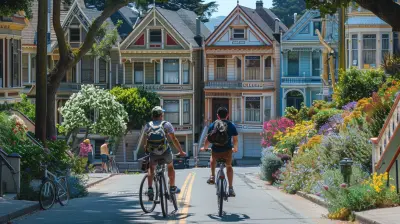
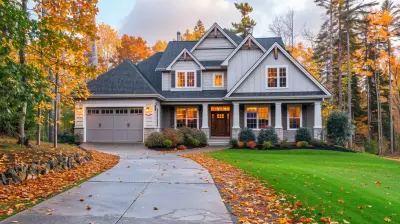
Urban vs. Rural Investments: Which Will Dominate by 2027?
12 September 2026
The question of whether urban or rural real estate will lead the market by 2027 does not have a single, clean answer. Anyone who tells you otherwise is selling something. What we can do is examine the forces shaping both segments, weigh the trade-offs honestly, and help you decide where your capital and attention belong.
Let's start with a blunt observation: the last five years have scrambled the old assumptions. Remote work normalized in ways few predicted. Migration patterns shifted, then shifted again. Interest rates moved violently. Construction costs climbed and stayed high. Through all of it, both urban and rural markets produced winners and losers. The lesson is not that one category beats the other. The lesson is that context determines outcome.

Why This Question Matters More Than It Used to
A decade ago, the urban versus rural debate was mostly academic for investors. Cities offered liquidity, jobs, and rent growth. Rural areas offered affordability and land. Each served a different investor profile, and the two rarely competed for the same dollar.That separation has blurred. Institutional capital now flows into secondary and tertiary markets. Build-to-rent operators target suburbs and small towns. Remote workers with city salaries bid up rural properties. Meanwhile, urban cores face office vacancies, policy uncertainty, and affordability crises that push both tenants and investors outward.
By 2027, the landscape will reflect decisions being made right now. Zoning reforms, infrastructure spending, climate migration, and demographic shifts are all in motion. Understanding these currents is more useful than picking a side.

The Case for Urban Real Estate Through 2027
Liquidity and Depth of Demand
Urban markets concentrate people, jobs, and amenities. That concentration creates depth. When you need to sell, there are more buyers. When you need to rent, there are more tenants. When you need financing, lenders know the market.This matters more than most new investors realize. A property is only worth what someone will pay for it, and liquidity determines how quickly and reliably you can convert an asset to cash. In a downturn, thin markets freeze first.
Infrastructure and Institutional Anchors
Cities host universities, hospitals, government centers, and corporate headquarters. These are not footloose. A hospital does not relocate because rent is cheaper two states away. A research university does not pack up when a neighborhood declines. These anchors stabilize demand across cycles.For investors targeting long holds, that stability has real value. It reduces the risk of a total demand collapse in a specific submarket.
The Rent Growth Story Is Not Uniform
Here is where nuance matters. Not all urban submarkets behave the same. Gateway cities like New York, San Francisco, and Boston have seen rent growth moderate or reverse in some segments, particularly in older office-adjacent residential product. Sun Belt cities like Austin, Nashville, and Charlotte have absorbed enormous supply, which caps rent growth in the near term even as demand remains strong.The urban opportunity by 2027 is likely to be selective, not universal. Infill locations near transit, healthcare, and education will hold up better than peripheral sprawl or districts overly dependent on a single employer.
Regulatory Risk Cuts Both Ways
Urban investing carries policy exposure. Rent control, eviction moratoriums, inclusionary zoning, and transfer taxes can all compress returns. Some investors treat this as a reason to avoid cities entirely. That is an overreaction, but it is not an irrational one.The smarter approach is to underwrite policy risk explicitly. If a city has a history of aggressive tenant protections, model lower rent growth and higher operating costs. If it has a landlord-friendly posture, you may get better cash flow but also more competition and higher entry prices.

The Case for Rural Real Estate Through 2027
Land, Scarcity, and Alternative Uses
Rural properties often include land, and land behaves differently from buildings. It does not depreciate the same way. It can be used for agriculture, timber, recreation, or future development. That optionality has value, especially in a world where food security and water rights are becoming strategic concerns.Investors who bought rural land near growing metros a decade ago have seen substantial appreciation, often without any income component. That is speculative, but it is not irrational. It is a bet on scarcity and proximity.
Cash Flow From Underserved Markets
Rural rental markets are frequently undersupplied. In many small towns, the rental stock is old, poorly managed, and owned by absentee landlords. A well-maintained property can command outsized rents relative to its acquisition cost.This is not a universal truth. It depends on local employment, population trends, and whether the town has a reason to exist beyond nostalgia. A rural market anchored by a hospital, a college, or a manufacturing plant behaves very differently from one that has been losing population for thirty years.
The Remote Work Wildcard
Remote work opened rural markets to a new buyer pool. People with urban incomes discovered they could live somewhere with lower costs and better quality of life. This drove meaningful price appreciation in amenity-rich rural areas: mountain towns, lake districts, and regions with outdoor recreation.The sustainability of this trend is uncertain. Some employers have pulled back on remote policies. Others have made them permanent. The net effect by 2027 will likely be a partial retention of the shift, not a full reversal. Rural markets that attracted remote workers and then built the infrastructure to keep them, such as broadband and healthcare access, will fare better than those that relied purely on novelty.
Operational Challenges Are Real
Rural investing comes with friction. Contractors may be scarce. Property management may be unreliable. Vacancies can last longer because the tenant pool is smaller. Financing can be harder to secure, particularly for properties with unusual features like large acreage or agricultural zoning.These are not deal-breakers, but they change the math. A rural property that looks like a bargain on price per square foot may be less attractive once you factor in higher maintenance costs, longer downtime, and the premium you pay for reliable local help.

Head-to-Head Comparison: What Actually Differs
| Factor | Urban | Rural ||---|---|---|
| Liquidity | High | Low to moderate |
| Entry price | High | Low to moderate |
| Rent growth potential | Moderate, selective | Variable, can be high in niche markets |
| Operating costs | High, especially taxes and labor | Lower, but contractor availability is a risk |
| Policy risk | Higher | Lower |
| Demand stability | Anchored by institutions | Dependent on local economy |
| Appreciation drivers | Job growth, scarcity, infrastructure | Migration, land value, resource demand |
| Management complexity | Lower, professional infrastructure exists | Higher, fewer reliable vendors |
The table is a starting point, not a verdict. Your specific market, strategy, and capital structure will determine which column matters more.
Common Mistakes Investors Make in Both Camps
Chasing Yield Without Understanding Why It Exists
A rural property offering a 12 percent cap rate is not automatically a better deal than an urban property at 5 percent. High yields often signal high risk: declining population, deferred maintenance, or a tenant base that cannot absorb rent increases. Ask why the yield is high before you celebrate it.Assuming Urban Appreciation Is Guaranteed
Urban property values have risen for decades in many markets, but that is not a law of nature. Detroit, Cleveland, and Baltimore have all seen long periods of stagnation or decline in specific neighborhoods. Past performance in a metro does not transfer to every block within it.Ignoring the Exit
How will you sell this property? Who is the likely buyer? In urban markets, the answer is usually straightforward. In rural markets, it may be a farmer, a developer, or a retiree from out of state. If you cannot articulate a plausible exit, you are not investing. You are hoping.Underestimating Management Drag
Remote ownership of rural property is a classic trap. You cannot drive by to check on things. You cannot easily vet contractors. A single bad tenant or a neglected roof can wipe out years of cash flow. Budget for professional management from day one, even if it feels expensive.Overlooking Insurance and Climate Risk
Both urban and rural properties face climate exposure. Coastal cities deal with flooding and storm surge. Inland rural areas face wildfire, drought, and hail. Insurance markets are repricing these risks in real time. A property that penciled out five years ago may not pencil out today once you account for current premiums.
What Will Actually Determine the Winner by 2027
The honest answer is that "urban versus rural" is the wrong frame. The better question is: which specific markets, in which specific segments, will outperform?Migration Patterns
Domestic migration has favored suburbs, exurbs, and select rural areas over dense urban cores in recent years. Whether that continues depends on housing costs, remote work policy, and quality-of-life factors like crime and schools. Markets that offer a genuine value proposition, not just cheap housing, will retain newcomers.Interest Rates and Financing
Higher rates hurt both categories, but they hurt different investors differently. Urban deals often rely on institutional financing and tighter underwriting. Rural deals often rely on local banks and seller financing, which can be more flexible. The cost of capital will shape which strategies remain viable.Supply Constraints
Urban infill is expensive and slow to build. Rural construction is often cheaper but logistically harder. Markets with genuine supply constraints, whether from geography, regulation, or labor shortages, will see more price support.Policy and Taxation
Property taxes, rent regulations, and land-use rules vary enormously. Some states and cities are actively courting investment. Others are making it harder. By 2027, the policy environment may matter more than the urban-rural label.Practical Guidance for Positioning Your Portfolio
If You Are a First-Time Investor
Start where you can manage the asset. If you live in a city, an urban or near-suburban property is often the better first purchase because you can oversee it, learn the market, and respond to problems. Rural investing as a first step is possible but requires a strong local partner.If You Are Scaling a Portfolio
Diversification across geographies and asset types reduces risk, but it also increases management complexity. Consider whether you want to be a specialist in one market or a generalist across several. There is no universally correct answer, but specialists often outperform generalists because they know their market deeply.If You Are Yield-Focused
Rural markets and secondary urban markets often offer better cash-on-cash returns than gateway cities. The trade-off is lower liquidity and higher operational risk. Underwrite conservatively and stress-test your assumptions.If You Are Appreciation-Focused
Look for markets with job growth, population inflows, and supply constraints. These exist in both urban and rural contexts. The key is to identify them before they become obvious, which requires local knowledge and patience.If You Are Risk-Averse
Urban markets with institutional anchors and diversified economies tend to offer more downside protection. They also offer lower upside. Know which trade-off you are accepting.
A Realistic Look at 2027
No one can predict the future with confidence, and anyone who claims otherwise is not worth listening to. What we can say is that the urban-rural binary will continue to blur. Suburbs, exurbs, and secondary cities will absorb much of the growth. Some rural markets will thrive, particularly those with amenity value, resource endowments, or proximity to growing metros. Some urban markets will struggle, particularly those with weak fundamentals and hostile policy environments.The investors who do well will be the ones who ignore the headline debate and focus on specifics: local employment, supply pipelines, demographic trends, and their own operational capacity.
Final Thoughts
Urban and rural investing are not competing philosophies. They are different tools for different jobs. The question of which will dominate by 2027 assumes a zero-sum contest that does not exist in practice. Capital flows where returns justify the risk, and returns are determined locally, not categorically.If you want a single piece of advice, it is this: stop asking which category is better and start asking which specific market you understand well enough to invest in with confidence. That question has a much better track record of producing good outcomes.
all images in this post were generated using AI tools
Category:
Real Estate StrategyAuthor:

Lydia Hodge
Discussion
rate this article
2 comments
Yvette Wade
Both urban and rural investments offer unique opportunities, but the choice really depends on individual goals. Urban areas provide growth potential, while rural properties can appeal with affordability and tranquility. Each has its merits worth considering.
October 10, 2026 at 4:48 AM
Sydney Gutierrez
Urban or rural, it's a classic showdown. One's all hustle and bustle, the other's got wide open spaces. Flip a coin or check your coffee preference!
September 27, 2026 at 12:10 PM
Lydia Hodge
Great points! Each has its own charm and potential. It really depends on what investors are looking for.