Understanding the Lifecycle of a Real Estate Investment
23 October 2026
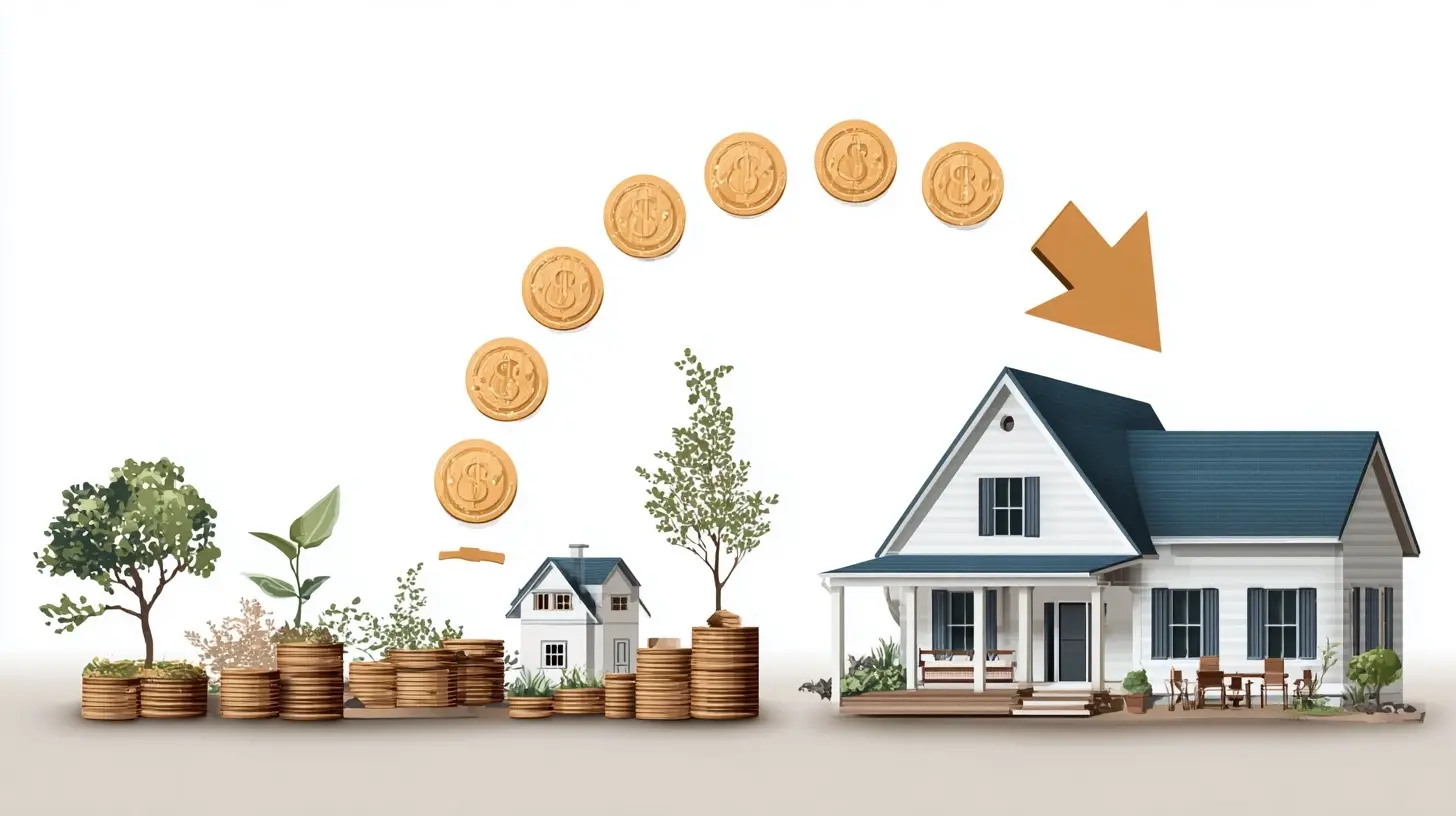
Most people picture real estate investing as a single decision: buy a property, collect rent, build wealth. That picture is incomplete, and the gap between it and reality is where a lot of money gets lost. A property is not a static asset. It behaves more like a living thing. It has a birth, a productive middle age, a slow decline, and eventually an end, whether that end is a sale, a rebuild, or a quiet exit at a loss. Investors who understand this arc make better decisions at every stage. Those who don't tend to react to problems instead of anticipating them.
This article walks through the full lifecycle of a real estate investment, from the moment you start thinking about buying to the moment you exit. Along the way, I'll point out the decisions that matter most, the mistakes that repeat across nearly every investor I've worked with, and the trade-offs that don't get discussed often enough.

Why Thinking in Lifecycles Beats Thinking in Transactions
A transaction mindset asks one question: is this a good deal right now? A lifecycle mindset asks a different set of questions: what will this property need in five years, who will want it in fifteen, and what is my exit plan if the neighborhood changes direction?The difference matters because real estate returns are rarely made or lost at the moment of purchase. They accumulate through a long series of small decisions: how you screen tenants, when you refinance, how much you defer maintenance, whether you sell into a strong market or hold too long. Investors who only think in transactions tend to overpay during hot markets and panic-sell during soft ones. Investors who think in lifecycles tend to buy with the end in mind, which forces discipline at the front end.
There's a second reason, too. Every stage of the lifecycle has its own risks, and those risks change shape over time. A newly renovated property in year one has almost no maintenance risk but carries lease-up risk. The same property in year twelve has stable cash flow but a growing list of deferred capital expenses. If you don't know which stage you're in, you can't tell which risks deserve your attention.

Stage One: Acquisition and the Pre-Purchase Phase
The lifecycle technically begins before you make an offer. This is the phase where you define your strategy, set your criteria, and do the diligence that separates a good purchase from an expensive lesson.Defining Your Investment Thesis
Before you look at a single listing, you should be able to state in one sentence why this property type, in this market, at this price point, will produce the return you want. Examples might be: "I'm buying small multifamily in a secondary market where rents are rising faster than prices because I want cash flow plus appreciation." Or: "I'm buying a dated single-family home in a strong school district because I can add value through renovation and sell to an owner-occupant in three to five years."An investment thesis is not a prediction. It's a filter. It tells you what to ignore. Investors without a thesis tend to look at everything, which means they underwrite nothing carefully.
Underwriting With Honest Numbers
Underwriting is where most beginners go wrong, and the error is almost always optimism. They underestimate vacancy, underestimate maintenance, underestimate the cost of turnover, and forget that property taxes and insurance tend to rise, not fall.A practical rule: build your pro forma with three scenarios, base, conservative, and stress. If the deal only works in the base case, it doesn't work. The conservative case should assume slightly higher vacancy than the local average and a maintenance reserve that reflects the age of the building, not a round number you picked because it felt safe. The stress case should ask what happens if rents fall five percent and you lose one tenant for three months.
Due Diligence Beyond the Inspection
The standard inspection covers the physical condition of the property. It does not cover everything that matters. You also want to review rent rolls and leases for unusual terms, check the history of insurance claims on the property, verify zoning and any pending changes to it, and look at the trajectory of the immediate neighborhood, not just its current state. A block that is improving and a block that is declining can look identical on the day you tour them.One often-missed item: talk to the neighbors. They will tell you things no document will, like whether the basement floods every spring or whether the previous owner had a habit of renting to anyone with a deposit.
Stage Two: Stabilization
Once you close, the clock starts on stabilization. This is the period when the property moves from "just purchased" to "operating as intended." For a turnkey rental, stabilization might take a few months. For a value-add project, it can take a year or more.The Lease-Up Period
If the property is vacant or you've inherited tenants who need to be replaced, lease-up is your first real test. The mistake here is pricing rent based on hope rather than evidence. A unit that sits empty for two months at an aspirational rent usually costs more than a unit rented immediately at a realistic one. Run the math: two months of vacancy at $2,000 per month is $4,000 lost. If the market rent is $1,900 and you priced at $2,100, you didn't gain $200 per month, you lost $4,000 plus carrying costs.Setting Up Systems
Stabilization is also when you build the operating systems that will carry the property for years: how tenants submit maintenance requests, how you track expenses, how you handle renewals, and how you communicate. Investors who skip this step end up managing by memory, which works for one property and fails at three.A simple example: a landlord who uses a shared spreadsheet and a dedicated email address for the property will, years later, be able to answer questions about expense history in minutes. A landlord who handles everything through text messages will not.

Stage Three: The Operating Years
This is the longest phase, and it's where most of the wealth is actually built. It's also where most investors get complacent.Cash Flow and the Reserve Question
Cash flow is the headline number, but the number that matters is cash flow after reserves. Every property has a capital expense clock ticking: roofs, HVAC systems, water heaters, parking lots, windows. These are not surprises. They are scheduled events with fuzzy dates.A practical approach is to set aside a percentage of gross rent each month for capital reserves, with the percentage based on the age and condition of the property. A newer building might warrant five percent. A fifty-year-old building with original systems might warrant fifteen percent or more. The exact number matters less than the discipline of actually funding it. Investors who treat reserves as optional tend to get hit with a roof replacement in the same year as a major vacancy, and that combination is what turns a manageable property into a forced sale.
Rent Growth and Retention
Raising rents is necessary, but how you do it matters. A tenant who has paid on time for four years and takes care of the property is worth more than the extra $75 per month you might get from a new tenant, especially after you account for turnover costs, vacancy, and the risk of a worse replacement.A balanced approach is to raise rents annually by a modest amount that tracks the market, and to reserve larger increases for situations where the current rent is clearly below market. Communicate early, in writing, and explain the reasoning. Tenants accept increases far better when they aren't surprised.
Maintenance: Reactive Versus Proactive
Reactive maintenance is fixing things when they break. Proactive maintenance is replacing things before they break. Proactive costs more in the short term and less in the long term, and the gap widens as the property ages.An analogy: a car owner who changes the oil on schedule spends more per year than one who doesn't, until the engine fails. Real estate works the same way. A water heater replaced on your schedule costs a few hundred dollars and a scheduled appointment. The same water heater failing on a Sunday night costs emergency rates, water damage, a displaced tenant, and possibly a rent credit.
When to Refinance
Refinancing is one of the most powerful tools in the operating phase, and one of the most misused. The case for refinancing is straightforward: if the property has appreciated and rates are reasonable, you can pull equity out tax-deferred and redeploy it. The case against is equally straightforward: you're resetting your loan term, possibly increasing your payment, and adding closing costs.The right question isn't "can I refinance?" It's "can I earn a better return on the extracted equity than I'm currently earning on the equity trapped in the property?" If the answer is genuinely yes, and you have a specific plan for the capital, refinancing makes sense. If you're doing it because rates are low and it feels smart, you're probably just adding leverage without a purpose.
Stage Four: Decline and the Decision Point
Every property eventually reaches a point where it needs more than routine maintenance. The roof is at the end of its life. The kitchen is dated. The neighborhood has shifted, or the building's systems are all approaching replacement at once. This is the decision point, and it's where lifecycle thinking pays off most.You have three broad options, and each has real trade-offs.
Option One: Reinvest and Reposition
You put capital into the property to extend its useful life and raise rents. This works well when the underlying location is strong and the property's issues are cosmetic or mechanical rather than structural or locational. The advantage is that you keep the asset and capture the upside. The disadvantage is that you're committing significant capital to a single property, and if your read on the market is wrong, you've made an expensive bet.Option Two: Hold and Harvest
You continue operating the property without major reinvestment, accepting lower rents and higher maintenance costs, and you harvest cash flow until the property no longer makes sense. This can work for an investor who is debt-free and values steady income over growth. The risk is that the property's value erodes faster than expected, and you end up selling into a weaker position than you would have had five years earlier.Option Three: Sell
You exit and redeploy the capital. The advantage is liquidity and the ability to move into a better opportunity. The disadvantage is transaction costs, taxes, and the possibility that you're selling at the wrong point in the market cycle. A 1031 exchange can defer taxes if you're reinvesting in a like-kind property, but it comes with strict timelines and requires careful planning.The most common mistake at this stage is denial. Investors keep holding a declining property because selling feels like admitting the investment didn't work out. In practice, selling at the decision point is often the most profitable move, because buyers will pay for a property with clear, addressable issues. Once those issues compound, the buyer pool shrinks.
Stage Five: Exit and What Comes After
The exit is not the end of the lifecycle. It's the transition to the next one. How you exit determines what you can do next.Timing the Sale
Perfect timing is a myth, but reasonable timing is achievable. The signals that suggest it's time to sell include: the property's capital needs are about to accelerate, the local market has had a strong run and inventory is rising, your investment thesis for the property no longer holds, or your own life circumstances have changed in a way that makes management burdensome.The signals that suggest holding is fine include: rents are still rising, the property is stable and low-maintenance, and you have no better use for the capital.
Preparing the Property for Sale
A property sold with clear documentation, recent maintenance records, and clean books will command a better price than one sold with a shoebox of receipts. Buyers pay for certainty. If you can show that the roof was replaced in 2021 and the HVAC in 2022, you've removed two major unknowns from the buyer's underwriting, and that is worth real money.Reinvesting the Proceeds
The final stage is redeploying your capital. This is where the lifecycle loops back to the beginning. The lessons from the previous cycle, about underwriting, reserves, and timing, should inform the next purchase. Investors who treat each deal as a fresh start tend to repeat the same mistakes. Investors who treat each deal as part of a portfolio and a sequence tend to compound their advantages.Common Misconceptions Worth Correcting
A few beliefs come up so often that they deserve direct correction."Real estate always goes up." It doesn't. Markets cycle, and individual properties can lose value for reasons that have nothing to do with the broader market. Location, condition, and local economic trends matter more than national averages.
"Cash flow is the only thing that matters." Cash flow matters, but a property with strong cash flow and a failing roof is a deferred loss. Total return includes appreciation, cash flow, principal paydown, and tax benefits, and it should be evaluated as a whole.
"You should never sell." Holding forever is a strategy, not a rule. Sometimes selling is the highest-return decision available.
"Maintenance is a cost to minimize." Maintenance is an investment in the property's future value. Underinvesting in maintenance is one of the most reliable ways to destroy returns.
A Final Word on Discipline
The lifecycle of a real estate investment rewards patience and punishes neglect, but it also rewards preparation. The investors who do well over decades are rarely the ones who made the single smartest purchase. They're the ones who made a series of unremarkable, disciplined decisions: honest underwriting, funded reserves, proactive maintenance, and exits that happened at the right time for the right reasons.If you take one thing from this article, make it this: treat your property as a long-lived asset with a predictable arc, not a one-time transaction. Plan for the stages ahead, and the decisions at each stage become much clearer.
all images in this post were generated using AI tools
Category:
Real Estate StrategyAuthor:

Lydia Hodge